Depression Glass: A Complete Guide to Patterns, Colors, and Value
Depression glass is the colorful, machine-made glassware produced in the United States from roughly 1929 to 1939. Factories pressed it in huge volumes and sold it cheaply, so it reached almost every American kitchen during the Great Depression.
Many families received their first pieces for free. Cereal brands, gas stations, and movie theaters handed out plates, cups, and bowls as premiums to attract customers.
Today, these once-humble dishes are among the most widely collected glassware in the world. This guide shows you how to recognize key patterns, read colors, confirm authenticity, and protect the pieces you own.
Popular Depression Glass Patterns to Know
Manufacturers released dozens of patterns, and most were produced as full dinnerware sets with plates, cups, serving bowls, and pitchers. Learning a handful of the most recognized designs gives you a reliable starting point for identification.
Each pattern below is widely collected, well documented, and relatively easy to find at estate sales, antique shops, and online marketplaces.
Cherry Blossom
Jeannette Glass Company produced Cherry Blossom from 1930 to 1939, decorating it with branches of cherries and blossoms. Pink and green are the most common colors, and you will also find opaque Delphite blue pieces.
Miss America
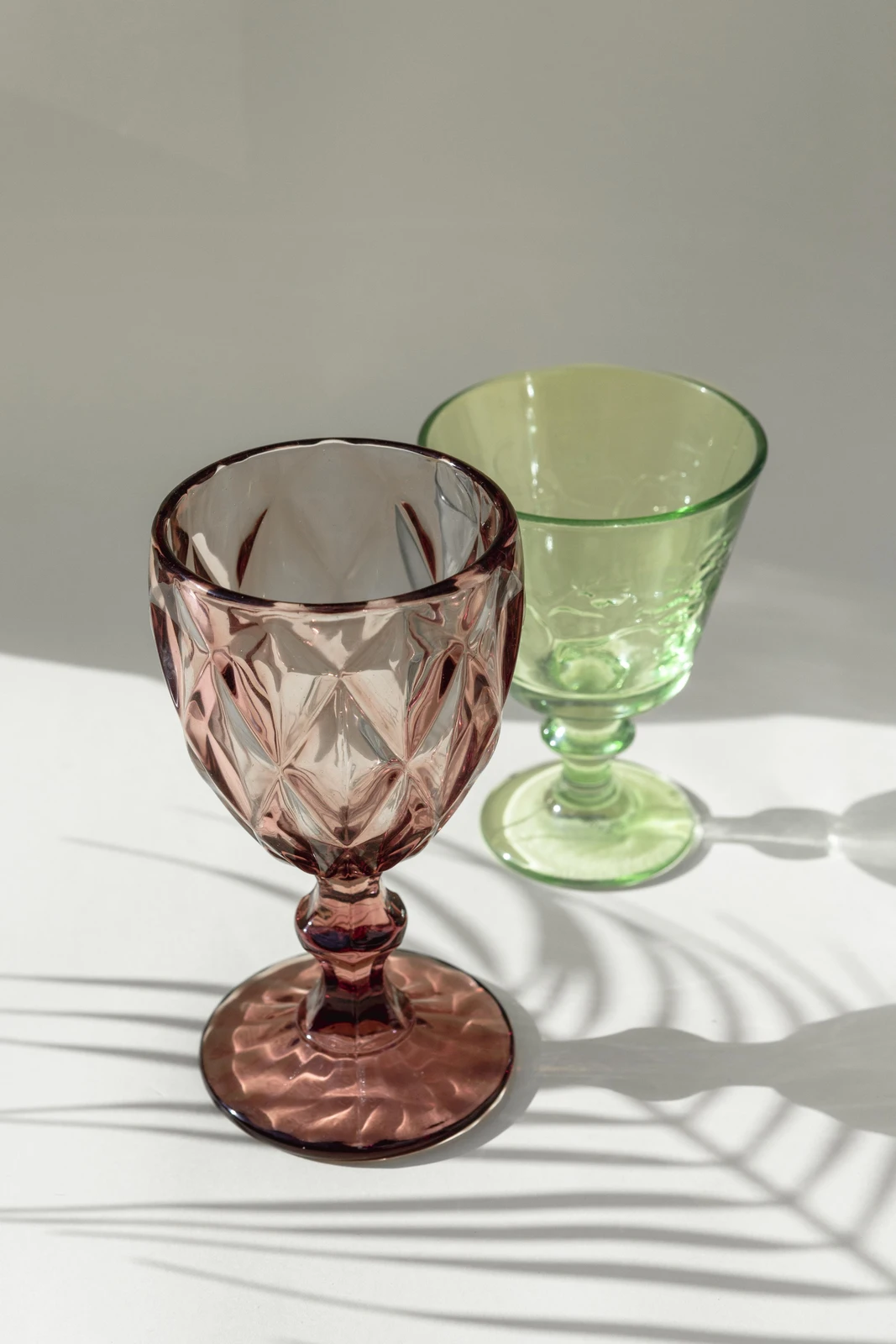
Hocking Glass Company introduced Miss America in 1935, using a sharp, diamond-faceted design that resembles cut glass. Pink and crystal are the colors you will see most often, while green and ruby red pieces are far scarcer.
Mayfair (Open Rose)
Hocking produced Mayfair from 1931 to 1937, and collectors often call it Open Rose for its embossed rose motif and scalloped edges. Pink is the most plentiful color, while blue and green pieces attract more attention from serious buyers.
Royal Lace
Hazel-Atlas Glass Company made Royal Lace from 1934 to 1941, and its delicate lace-like border makes it easy to spot. Cobalt blue Royal Lace is one of the most desirable color and pattern combinations in the entire category.
American Sweetheart
Macbeth-Evans Glass Company manufactured American Sweetheart from 1930 to 1936, best known in a thin pink and an opalescent white called Monax. Hold a Monax plate to the light and you will often see a faint fiery glow along the rim.
Sharon (Cabbage Rose)
Federal Glass Company produced Sharon from 1935 to 1939, and its full, open roses earned it the nickname Cabbage Rose. Amber, pink, and green were the main production colors, so these are the shades you are most likely to encounter.
Common Depression Glass Colors and What They Tell You
Color is often the first clue you notice, and it can help you narrow down both the manufacturer and the production period. Factories achieved each shade by adding metal oxides and other minerals to the molten glass batch.
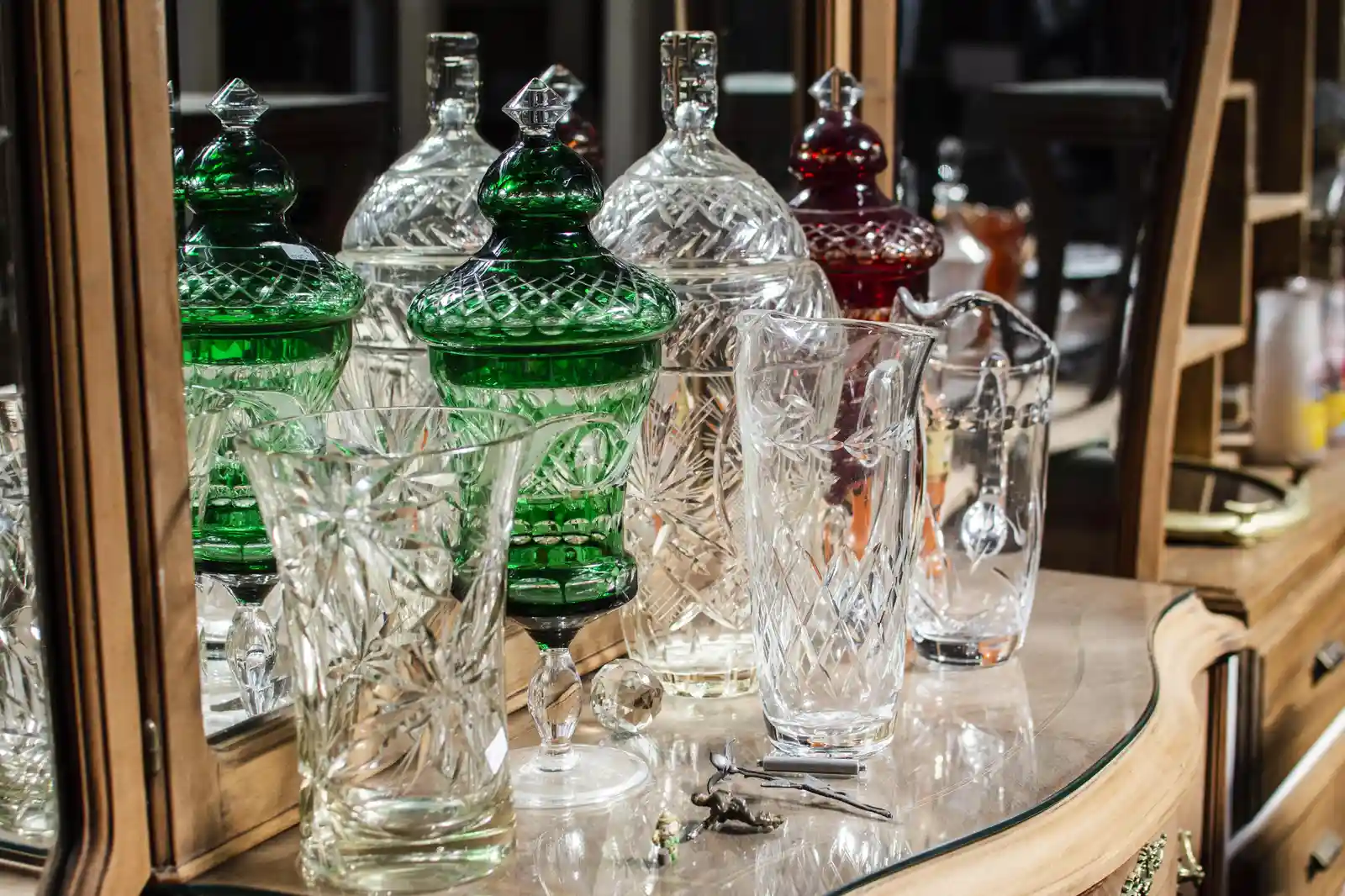
Clear glass, which collectors call crystal, and yellow glass were also produced, along with opaque colors such as jadeite and Delphite. The four shades below, however, make up the bulk of what you will find.
Pink
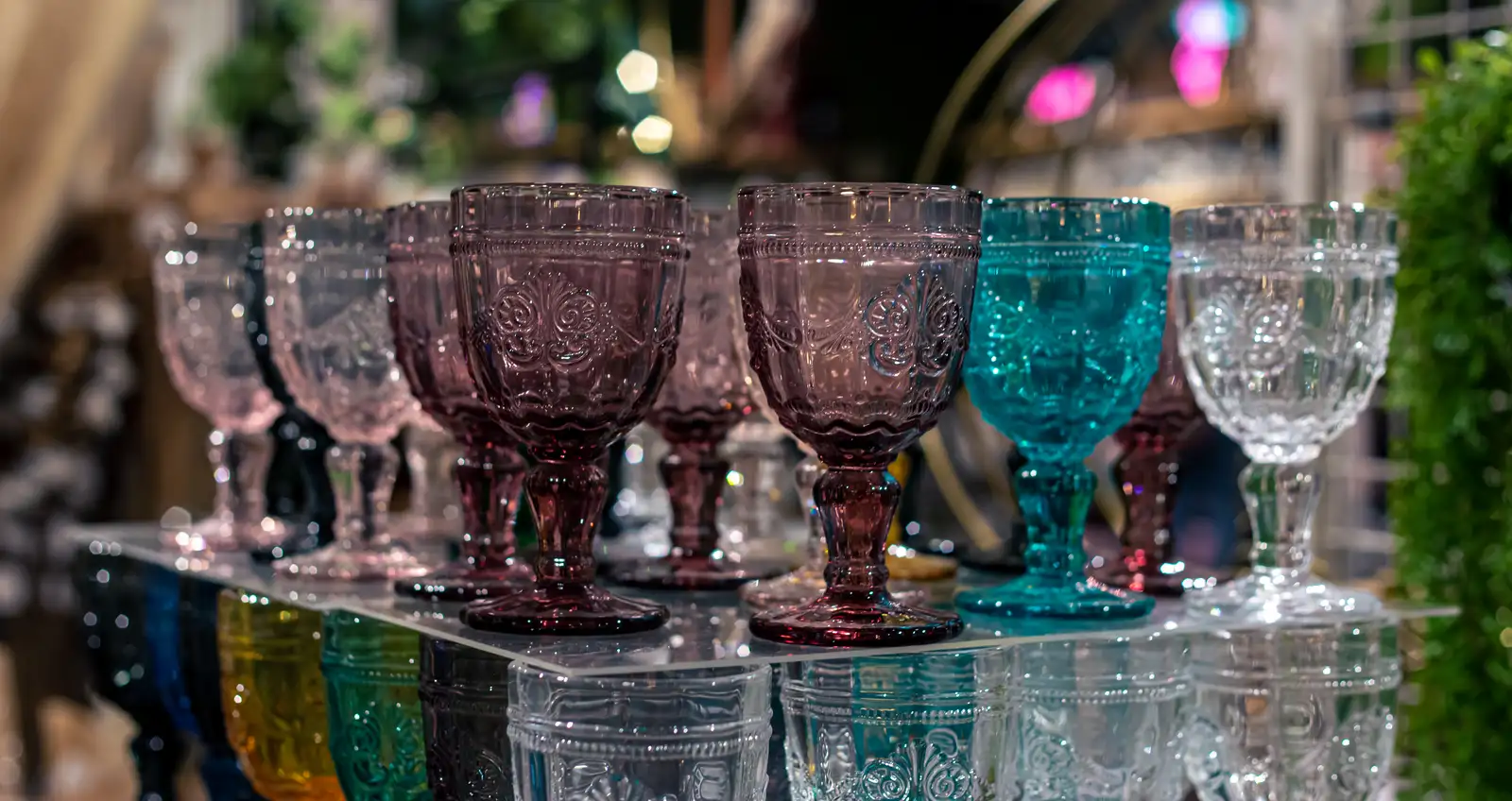
Pink is the most widely produced and most recognizable color, made by nearly every major factory of the era. Its popularity means you can build a complete pink set with patience and a modest budget.
Green
Green was one of the earliest colors produced and ranges from pale mint to deeper emerald tones. Some green pieces contain uranium, which makes them glow bright green under an ultraviolet light.
Amber
Amber offers warm honey and brown tones that pair well with rustic and traditional table settings. It is generally less expensive than pink or blue, making it a practical choice for beginners.
Cobalt Blue
Cobalt blue, often called Ritz blue, was produced in smaller quantities and is among the most sought-after colors. Expect to pay more for authentic cobalt pieces, especially in patterns such as Royal Lace.
How to Identify Authentic Depression Glass
Because Depression glass was mass-produced in inexpensive molds, genuine pieces carry small manufacturing flaws that modern reproductions often lack. Use the following checks together, since no single test confirms authenticity on its own.
Check for Mold Seams and Small Imperfections
Run your fingertip along the edges and sides to feel for faint mold lines. Tiny bubbles, straw marks, and slight unevenness are normal signs of period production.
Compare Weight and Thickness
Original pieces are usually thin and relatively light for their size. Reproductions are often heavier, thicker, and noticeably more uniform.
Study Pattern Detail and Color Accuracy
Compare your piece with photographs in a trusted reference guide, paying attention to how crisp the design looks and whether the color matches documented shades. Reproduced patterns, including Cherry Blossom, Miss America, Mayfair, and Sharon, often show blurry detail or slightly off tints.
Use an Ultraviolet Light
A handheld black light can confirm the presence of uranium in certain green pieces, which glow bright green. A glow alone does not prove age, so treat it as supporting evidence rather than proof.
How Much Is Depression Glass Worth?
Most common pieces, such as pink or green cups and saucers, sell for modest amounts, which keeps Depression glass accessible to new collectors. Value rises with the rarity of the pattern and color, the overall condition, and demand for specific items such as pitchers, butter dishes, and cookie jars.
Chips, cracks, cloudiness, and heavy scratches reduce value significantly, so inspect every piece under good light before you buy. To estimate current prices, compare recent sold listings rather than asking prices, and consult an up-to-date price guide.
How to Care for Your Depression Glass Collection
Your pieces have survived for nearly a century, but they remain more fragile than modern tempered glassware. A few simple habits protect both their appearance and their value.
Treat every piece as a display item first and a functional dish second, especially if it is rare.
Wash by Hand Only
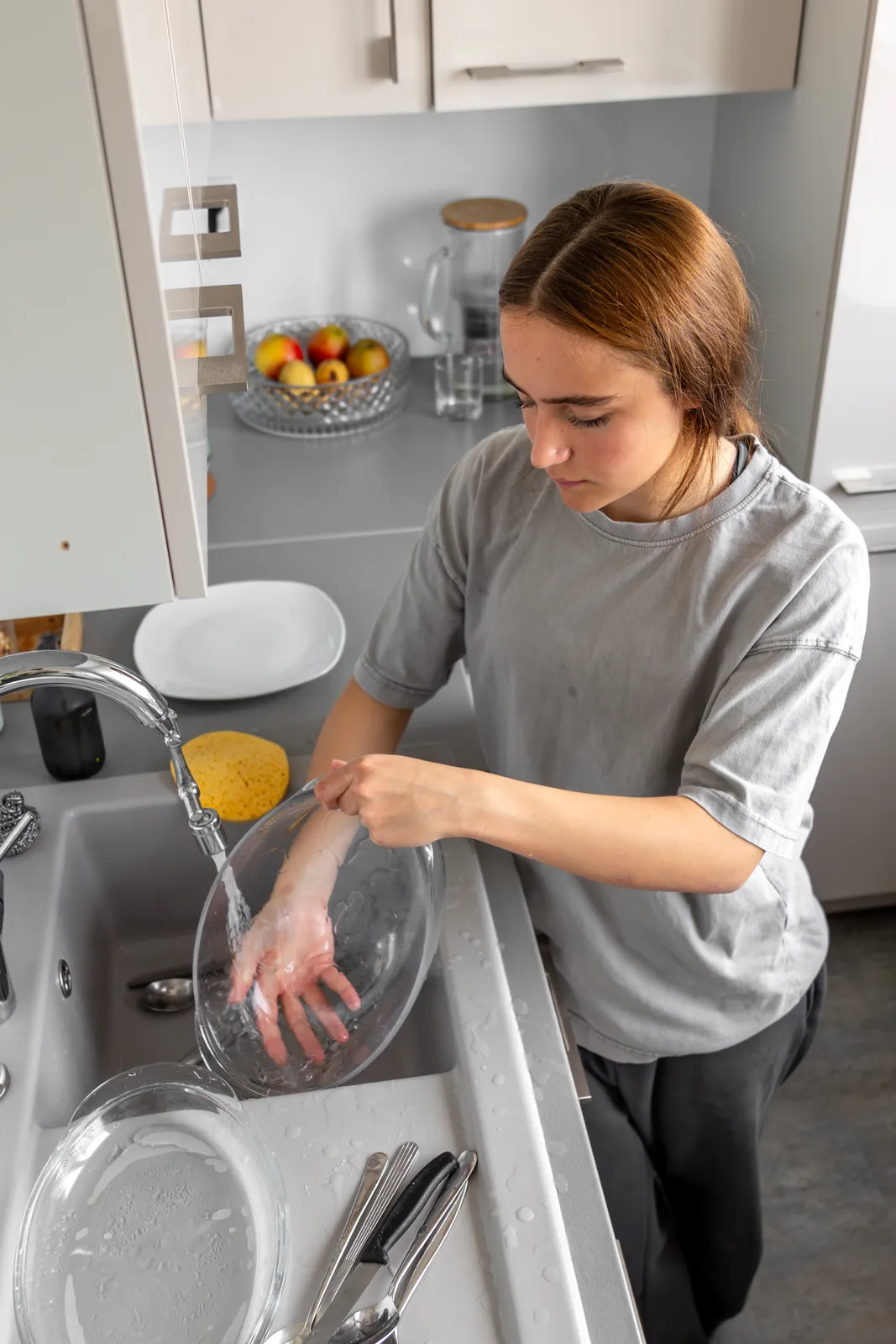
Use lukewarm water, a mild dish soap, and a soft cloth. Dishwasher detergents and high heat can permanently cloud or etch the surface.
Avoid Sudden Temperature Changes
Never pour boiling liquids into cold glass or move pieces directly from the refrigerator to a hot surface. Keep vintage glassware out of the microwave and oven, since it was not designed for that kind of heat.
Store and Display With Care
Place felt or soft paper between stacked plates to prevent scratches, and avoid nesting bowls tightly. When you display Depression glass in a cabinet or window, choose a stable shelf away from heavy foot traffic.